Showing posts with label GPS. Show all posts

Archives - GPS in Rowing

Another look back into the archives for new readers today for our articles on using GPS in rowing. Some of these posts included good commentary by readers as well. Please add more if you have anything to add.

New Series - GPS in Rowing


GPS in Rowing the NK Position - Interview!

Volker Nolte Study - Impeller vs. GPS

In2Rowing adds GPS to cox box

Garmin Interview on GPS and Rowing


If you enjoyed this post or other information on the site, subscribe to the Rowing Science Newsletter for regular updates and exclusive insider information for subscribers only.

or subscribe to the RSS Feed

Garmin Interview about GPS and Rowing


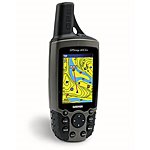
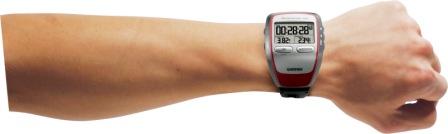
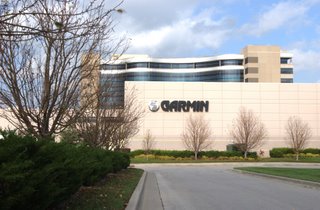
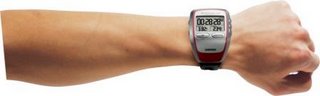
Jessica Myers, Senior Media Relations Specialist at Garmin was kind enough to respond to my request for an interview about their GPS units and their suitability for rowing. She also passed on a couple of photos - one of their facility in Olathe, KS and the other of the Garmin Forerunner 305 - one of the units she recommends for rowers.


The interview doesn't provide any of the technical details that I might have liked to see. I had hoped that the first question might have led to something more for our readers. I did ask for more, but this was all the information that was available. In fact the responses really don't respond to any of the criticism about using GPS in rowing. On the other hand she does provide a few interesting bits - such as the availabliity of a floating unit, and the availability of an (I'm sure pricey) 5 Hz units.


-------------------------------------


[RS]: One of the criticisms form rowers is the frequency of measurements. My unit returns measures every second (1 Hz) - are there units available now, or coming soon, that sample more frequently?


[Garmin]: With a WAAS enabled unit (which most GPS devices now have), the GPS update rate is once per second. The exception to this is with some aviation units where the GPS update rate is faster (5hz update = 5 times/sec). With the one/second update rate, GPS does a great job of calculating an overall speed, but it does not always provide as thorough information in relation to acceleration and deceleration.


[RS]: How is velocity calculated exactly? Is it based on previous postions? In other words, does it truely reflect the velocity at that moment in time - if not, how far back in time is the measure going (we are interested in even tenths of seconds here).


[Garmin]: I can't provide you with specifics on the algorithms we use to calculate the velocity because it's proprietary.


[RS]: Another concern (though some would say benefit) is that on-water measures are relative to land - so that a boat sitting still, but in a current, would register a velocity. Is there a way to calibrate the unit - in effect to define what is zero velocity to take currents out of the equation?


[Garmin]: No, we don't currently have a way to calibrate the unit so that it takes current out of the equation.


[RS]: The extra maps for the units are (relative to the cost of the unit itself) a bit pricey - I realize they give a great deal of information but some coaches are really only interested in a small body of water less than 10 km in any direction - would there ever be an option to obtain a more detailed map, but of a limited area?


[Garmin]: I can pass on your request about having cartography cards with smaller segments of information. One of the reasons the cards are divided as they are is because the primary audience that purchases this mapping data is fishermen. As you might expect, they often prefer to have more information so that they're not limited to one area while on water.


[RS]: Are there any materials on your web site that you would recommend people look at?


[Garmin]: Regarding info on our website -- it depends on what type of info you want. If you're looking for basic GPS info there are several places: http://www.garmin.com/aboutGPS/manual.html and http://www.garmin.com/aboutGPS/. If you want more information about WAAS (which is what I referred to above that makes GPS more accurate): http://www.garmin.com/aboutGPS/waas.html.


[RS]: Are there any of your units in particular that you would recommend for us to use?


[Garmin]: We offer several different GPS units that your readers might like. If they want a unit that is more devoted to fitness, I recommend the Forerunner 305: http://www.garmin.com/products/forerunner305/. I've personally never tried this unit rowing, but I know of others who have and they like it. Note, the Forerunner 305 doesn't show maps, so if maps is important you don't want this unit. If you do want maps, the top of the line unit is the 76CSx. One of the nice things about this unit is that it floats. It also has our new, highly sensitive GPS receiver (SiRFstarIII receiver) that lets it acquire a signal faster: http://www.garmin.com/products/gpsmap76csx/. If you want a unit with a faster GPS update rate, the GPSMAP 496 has a 5hz update rate. The 496 is an aviation unit, and therefore has lots of other features that you're probably not going to want or need. It's also costs a little more because of the aviation components that are on the unit. Another popular unit on the water is the Foretrex: http://www.garmin.com/products/foretrex201/. Windsurfers especially like this unit because it lets them keep their hands free while still monitoring their speed and tracking their waypoints. As with the Forerunner, this unit doesn't do mapping, but you can take all of the waypoints acquired on the unit and download them to www.MotionBased.com where you can see your tracks on a variety of maps including Google Earth. MotionBased.com has a free and subscription portion, so you can always check it out for free if interested. It has a very big following and is very popular with those doing water sports.


[RS]: Many thanks for your time.


[Garmin]: I hope this information is somewhat helpful. Please let me know if you have any additional questions.


If you enjoyed this post or other information on the site, subscribe to the Rowing Science Newsletter for regular updates and exclusive insider information for subscribers only.


or subscribe to the RSS Feed


Technorati Tags: , , ,

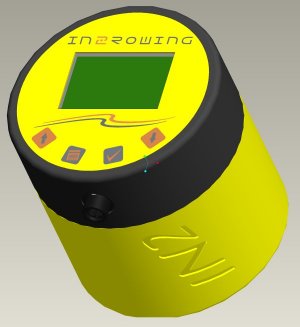
In2Rowing adds GPS to a cox box

Today we look at the cox box alternative produced by upstart company In2Rowing that includes a built in GPS receiver so that it can also provide distance and velocity measures. It is exciting to see someone trying to break into the market and provide some competition for Neilsen-Kellerman as competition breeds innovation!

Whatever your take on the GPS vs Impeller debate, it is exciting to see the velocity-distance unit combined with the cox box so that big-boat crews won't need both a cox box and a speed coach to provide all the information that they need. It is also exciting to hear that the In2Rowing gang are continuing to innovate, looking at including an accelerometer in their product. This could provide some interesting opportunities for researchers to conduct research on a fairly large scale with affordable equipment. Unfortunately the drive to innovate at In2Rowing has them continuing to push the envelope, rather than bringing a product to market. I would encourage them to get something out there!

If anyone has tried one of the handheld GPS units, you'll know how cool it is to get back from training and overlay your session on a map using the GPS software (I have used the Garmin unit). In2Rowing have perhaps one-upped them at least for coolness - as we can't evaluate the usefulness compared to Garmin's Motion-based web software- by having their sessions overlay on Google Earth! NK also has download capabilities so we will have to be careful not to get too focussedon the GPS units cool-fact and consider the usefulness of these capabilities in all units - see tomorrow's post on off-water analysis on training with the various options available to rowers. I have tried the Motion-based option with my crews, but was reminded of it by my most frequent reader and commenter "anonymous."

In2Rowing's Nathan Seidle responded to my inquiry by sending a lengthy comment:

The In2 is a funny beast. It was part of the reason I started Spark Fun Electronics (www.sparkfun.com) which is now a rapidly growing electronics company. We are young, idealistic, and dumb when it comes to marketing, but we love to play with electronics.You've got a really good Blog going! Great breakdown and as far as I can read into it - a very balanced look at tech on rowing shells....

The real kicker with the In2 is that we have access to so much technology through Spark Fun, that we keep trying to pack it into the In2. First it was GPS, then data logging, then accelerometer data. We've tried hard to keep it under control but I believe we are a few weeks away from our pilot run. We already have list of 10-15 testers and inquires from enough programs to keep the heat on.There will always be the debate between GPS vs. Impeller, but we don't really mind and neither does NK. We've had a lengthy chat at HOC last year where In2's booth was opposite NK's much larger booth. Chris (I actually completely forget the name of the head marketing there) was really excited to see more competition in the field. NK felt like they always took the heat from rowers when their units broke or when their design hadn't changed in years. And after attempting to build my own water-proof (read coxswain proof) enclosure, I have nothing but the utmost respect for their bomb-like built units - they stand up really well!What we plan to offer is more technology, more data, and more ease of use. It can be the greatest widget in the world, but if no one can install it, calibrate it, or keep it stuck to the boat, customers will look elsewhere. When I was on the Univ. of Colorado crew team, we could only afford two units for our 12 shells. One coxswain always seemed to forget one of the Speedcoach units, and the other never could troubleshoot the wiring when things didn't work.Just checking in to the NK site, looks like the new Speedcoach XL3/4 went from advertising a 9 mile range down to a 1/4 mile range. They hit the same barriers we did with power output and antennas near water (horrible for range).

I don't know if his comments about the Speedcoach XL are correct or not - nor can I imagine any coach monitoring from 9 miles away - but we will have more on the XL soon direct from NK.

Coming tomorrow

Off-water workout analysis options!

Other Posts in the GPS in Rowing Series

Series Intro

The NK Position

Nolte Study

Or try the Kleshnev Straw for a low-tech solution

Volker Nolte Study on GPS vs Impeller for NK

We seem to have hit something with this series, with today being a record day for readers - double the previous day. More importantly, we have some impassioned comments - all from GPS users, but replied to by NK! Any passionate stroke coach users out there?

As promised for today I present the study by Volker Nolte as published in the NK 2005 Catalog. I hope that they don't mind this copy as I have no way to host their catalog - I would be happy to provide a proper link to the full catalog if it becomes available.

First my comments after reading the study.

Dr. Nolte's comments are presented quite clearly. A few points though to highlight:

GPS calibration is automatic. The Speedcoach calibration requires a known distance. If you don't have one - how will you create one accurately?

The accuracy measures suggest that for a few strokes with the GPS off by 1-15 m it will be extremely inaccurate, but it is also 1-15 m off for ANY distance. The impeller though is listed as 1-2% off for any distance. For a 2000 m course then, assuming only 1% error it is off by 20 m. The GPS would seem to do a better job, and gets even better as the distances get longer. NK seems to understand this though (see yesterday's post for the hint at combining the two technologies).

It is widely reported that on a body of water with a current the GPS will be wrong - which basically means that the satellite will see a boat that is stopped, but sitting in a current, as moving. The impeller though won't move while sitting still in a current. I would think that for distances this is in favour of the GPS - rowing courses do not change their length based on a current. Nolte would seem to agree, as under GPS, with current, he lists the measurement of distance over ground as a positive.

What the reports of current vs. still water do report correctly is the registered velocity - sit still in a current and the impeller reports zero velocity - which is what you would want if you use velocities to indicate training intensities. The GPS does not accurately report what you are accomplishing as an athlete with respect to velocity.

If all you care about is average pace for training intensity - again, each unit has its strengths. In still water the GPS would seem to win - but in a current the impeller wins - though again, it needs to be calibrated.

What most reports seem to rely on to discourage the use of the GPS is the rate of reporting. If the impeller can report at around 100 Hz an athlete can see virtually instantly how their technique affects their velocity. As a feedback mechanism for technique this is vastly superior to the GPS, which reports only once every second. The GPS then is only good for AVERAGE pace or velocity, not INSTANTANEOUS.

Garmin who have a considerable share of the handheld GPS market have agreed to an interview and I hope to have them address some of these concerns. NK will also be providing more information, so stay tuned for more.

Nolte's Study follows:

GPS vs. IMPELLER

With emerging technology and affordability of GPS, coaches and rowers often ask why NK's speed measurements still rely on an impeller. Below is a recent article written by Dr.Volker Nolte, an expert on biomechanics as well as internationally accomplished coach and rower, comparing GPS and Impeller based speed measurements:

Thanks to the improvements in technology, it is now possible to give rowers invaluable feedback about their performance in the boat. Electronics developed at a pace that was unthinkable a few years ago measures time and distance with minuscule sensors and computer chips. The computer then calculates related quantities like stroke rate and speed, displays it on monitors and still is small and light enough to be used in a racing shell without any measurable influence on the performance of the rower. Therefore, it is understandable that more and more rowers
utilize such equipment.

Rowers use electronic feedback equipment to direct their training towards very specific, but different goals. High performance athletes want to control their training intensity to gain the desired fitness improvements in the most effective way and look for feedback during their races. Recreational rowers need information to direct their power output for health reasons. Researchers use training and race data to analyze performances for physiological, biomechanical and strategy studies.

For each of these tasks, it is critically important that the feedback one receives from the equipment is correct. The electronics provide indicators that potentially have very serious and important consequences for the rower. In case of incorrect data feedback, athletes may choose inappropriate intensities that do not lead to improvements, or even put the athletes' health at risk. Obviously, researchers need proper data to interpret their findings correctly.

Therefore, it is very important for any user to know exactly which data the respective equipment provides. In general, two different methods are currently utilized to measure the quantities mentioned above: Impeller and GPS.

Impeller measurement is based on the principle that the water sets it in a motion that corresponds with the speed of the boat that it is attached to. The motion of the impeller is directly dependent from the flow of the water relative to the boat. This means that the movement of the boat relative to the water is measured. Sensors in the boat record the spinning of the impeller to calculate the required data.

Global Position Systems (GPS) measure the position of the receiver as a place on the earth's surface. If the receiver is connected with the boat, GPS is able to track its movement and can calculate various data from that. This means that the movement of the boat relative to the ground is measured. Below, you find a comparison of the two measurement systems.

(Data from tables presented as photos - click on image to see original size.)


In conclusion:

Despite its very simple usage, GPS systems have to be operated with care. The information generated by GPS is potentially extremely inaccurate, especially when used on a body of water with current. Used without consideration of this fact, the training feedback could harm an athlete's development or even health.

The impeller system, however, clearly shows advantages when calibrated properly. When not calibrated, the impeller system will still show accurate, corresponding changes in speed.

GPS in Rowing - the Neilsen-Kellerman Position

This is the second posting in the series on GPS in rowing.

Frank Biller is charge of World Sales of Watersport and Timing Instruments for Nielsen-Kellerman (NK) and also happens to frequent the Rowers World Forum, was kind enough to offer some comments on behalf of NK for this series. In his comments he refers to "the study" by Volker Nolte. I will post some comments about the study in the next few days.

"...I am more on the user side than the development. However, being a small company and having long background in the sport, I do a fair amount of development as well.

GPS would be great, for obvious reasons. Unfortunately, the technology is not accurate enough for speed measuring of boats (rowing and paddling). Perhaps in the future there will be a solution that is affordable and more useful. In addition, no matter how high the signal frequency, it does not eliminate the "current issue" when rowing on water with current (which by the way includes many lakes as well).

...I think the study gives you a great overview on why we don't use and recommend GPS. Perhaps in the future we may incorporate it with the impeller for a combination, e.g. speed measurement with impeller, distance measurement with GPS on standing water, as well as a calibration routine that runs in the background. But then again, we are in a budget tight sport, and costs go up very fast.

The impeller is truly a great method for measuring boat speed versus the water. Depending on the speed of the hull it measures the speed around 100 times per stroke and averages the measurements exactly per stroke and displays it as such. Due to high variance in speed throughout the stroke this is important, as single readings do not provide much useful information. In addition, it's cheap, easy to install, produces very minimal drag (0.2 % in a single, less in bigger boats) and is being used by almost every top crew internationally."

This seems to sum up NK's position nicely, and I'm thankful that Frank was kind enough to offer his thoughts. It is intriguing to think of a combination device that includes GPS and the impeller - did Frank let some development work slip, or is this just wishful thinking? I have also been granted an interview with one of the NK developers and I should be able to follow up soon with more details on this posting and more. I have some plans for that interview that don't relate to the GPS question - but I'll keep that one quiet for now and just suggest that you stay tuned for more exciting things soon.

I would encourage readers to look at the comments for yesterdays post which include some interesting thoughts from experienced, and enthusiastic, GPS using rowers. I will include some of them in the summary posting for the series.

New Series - GPS in Rowing

Today I present an introduction to the next series in the Blog - The use of using GPS in rowing. I have noticed more and more coaches putting their hand held GPS receivers in with their crews to see what information it can give them. People are excited about getting velocity and distance data and being able to log their workouts for later display on their computers. They use it to give feedback on technique changes and more. In a slightly different role, many a coach has used their GPS units to lay out courses for training, racing and time-trialing.

GPS has the reputation amongst the general public of being incredibly accurate - after all, it can pinpoint your position anywhere on the planet. But is it really that accurate? How useful is it in rowing? How does it compare to the more accepted impeller on the NK SpeedCoach, in terms of accuracy, and general features for coaches? How useful is it for laying out a course?

If you patrol the various message boards for rowers you will quickly see some of the benefits of GPS - the units record every second of the workout for later downloading, velocity and distance measurements are available without adding a speed coach to the boat, no impeller is required on the hull, measurements are relative to land so distances are not affected by currents. On the other hand, you will also see many criticisms, most notably that the GPS is in fact not all that accurate (up to 15 m off for a single position), it ONLY records every second so changes within a single stroke can't be seen, it does not measure relative to water so velocity measurements will be affected by currents and more. We will examine these in some detail during this series of posts.

I was kindly given an 2005 Nielsen Kellerman (NK) catalogue by reader Frank Biller who is the Nielsen Kellerman Head of World Sales for watersports and timing instruments. This catalogue included a paper by Dr. Volker Nolte comparing GPS with the NK impeller. Dr. Nolte most of you will know as the editor of Rowing Faster; he is one of the most well-respected experts on the biomechanics of rowing. The findings in this paper will be presented in one of the next posts in this series.

Mr. Biller was also kind enough on behalf of NK to do a brief interview about why they don't currently use GPS in their systems, and the possibility of using it in the future. Look for the interview in another upcoming post.

Finally, In2Rowing is developing an alternative to the NK Cox Box that has GPS built in. It looks like an intriguing product. It includes 256 MB of memory to record workouts that can later be downloaded and overlaid on Google Earth Maps! I have invited them to do an interview as well for publication. I hope to have something soon, but will present something on this product regardless soon as well.

There is much to examine in this series, and along the way I will include a few other topics that come up so that those of you who are not excited about GPS have something to look forward to as well. In the meantime who out there has tried GPS in a boat? Are there any heavy users of the SpeedCoach who may have innovative ways of using it?

Please share your experiences with us in the comments or e-mail me.